
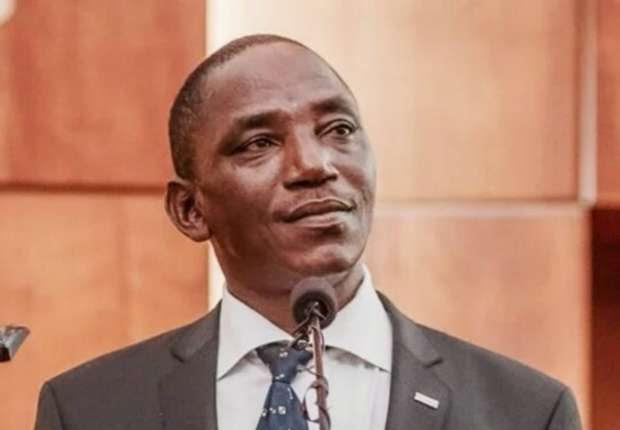

BAUCHI — Former Minister of Youth and Sports, Barrister Solomon Dalung, has launched a fierce verbal assault on the All Progressives Congress (APC), accusing the ruling party of weaponizing the Economic and Financial Crimes Commission (EFCC) to force Bauchi State Governor, Bala Mohammed, into a political defection.
Speaking during an award ceremony in Bauchi on Saturday, January 24, 2026, the former minister and activist characterized the recent spate of arrests involving high-ranking state officials as a “political vendetta” rather than a legitimate fight against corruption. Dalung alleged that the federal government is utilizing security agencies to destabilize the state’s administrative structure in a desperate attempt to compel the Governor to join the APC ahead of the 2027 election cycle.
“Now the government of Bauchi is being pressured; they want the Bauchi Governor to return to APC,” Dalung declared. “It is unbelievable that state workers are being taken away simply to break his resolve. If he says he is not going, it is not an excuse to be arresting his staff.”
The activist specifically pointed to the recent detention of the State Commissioner of Finance and the Accountant General, arguing that the true motive behind these actions is to paralyze the state’s financial institutions and disrupt the payment of salaries. He warned that such a move is designed to incite civil unrest and create a rift between the state government and the public.
Dalung further criticized what he termed the “hypocrisy” of the APC’s anti-corruption crusade, alleging that the ruling party has become a sanctuary for those fleeing justice. “APC leaders have sent a message that if a person steals from a bank and runs to the APC, they enter a place of safety. That is why accused thieves are flocking to the party,” he stated, calling for an end to the “discrimination” in the application of the law.
The former minister emphasized that the struggle in Bauchi is about the preservation of democracy and the rule of law, rather than the interests of any single individual. He maintained that political affiliation should be a matter of choice rather than the result of institutional coercion or the “malicious use of power.”
As of Sunday, January 25, 2026, the EFCC has not officially responded to Dalung’s specific allegations of political blackmail. However, the commission has consistently maintained that its investigations into state finances are driven by credible evidence of financial crimes. Dalung concluded by urging the people of Bauchi to remain peaceful and stand firm against any attempts to plunge the state into chaos for partisan gains.






