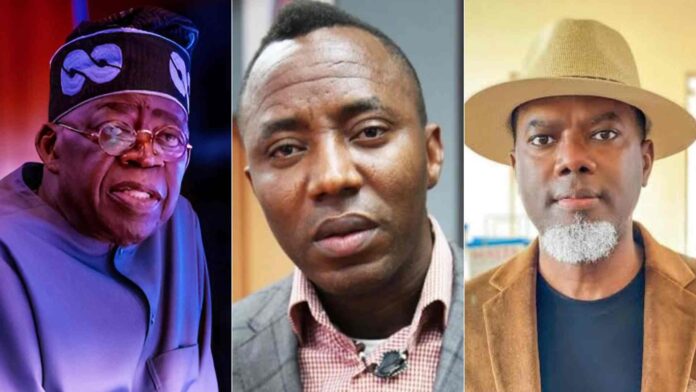
ABUJA – The Federal High Court was transformed into a theater of political irony on Tuesday as activist Omoyele Sowore successfully turned the words of presidential ally Reno Omokri into a legal shield against cybercrime charges.
In a major blow to the prosecution, the court admitted into evidence viral video clips of Omokri—now an ambassador-designate—repeatedly labeling President Bola Tinubu an “international drug baron” during the 2023 election cycle.
Sowore’s lead counsel, Abubakar Marshal, grilled the Department of State Services (DSS) witness on a glaring double standard: if Sowore is being prosecuted for calling the President a “criminal,” why was Omokri rewarded with a diplomatic appointment for making even more explicit allegations?
“Since Reno called Tinubu a drug baron and became an ambassador, it is reasonable to believe he told the truth,” Sowore argued during the session. The DSS operative was reportedly left speechless when asked if the agency had cleared Omokri of the same “malicious falsehoods” they now charge against Sowore.
Tinubu’s ‘Right to Insult’ Video Admitted
The defense scored a second tactical victory by tendering a video of President Tinubu himself. In the footage, the President is seen affirming the rights of Nigerians to criticize and even “insult” him as part of their democratic freedom.
When the DSS agent claimed ignorance of the President’s public stance on criticism, the court overruled the prosecution’s frantic objections, admitting the video as a certified exhibit. The defense maintains that the President’s own words invalidate the DSS’s attempt to criminalize “uncomplimentary” speech.
Omokri’s Courtroom Pivot
The drama follows Omokri’s recent frantic retractions and apologies, in which he claimed he was “misled” by media reports and Peter Obi. However, the judge’s decision to admit the original “drug baron” clips means that despite Omokri’s current loyalty, his past accusations are now a permanent part of the judicial record in the Federal Government vs. Omoyele Sowore.
Legal analysts suggest the admission of these exhibits significantly weakens the state’s case, as it forces the court to weigh the President’s public commitment to free speech against the DSS’s crackdown on his critics.
The trial has been adjourned to February 4, 2026, for further cross-examination.