


ABUJA — The administrative paralysis of the Federal Capital Territory (FCT) reached a definitive breaking point on Tuesday, January 27, 2026, as the Nigeria Union of Local Government Employees (NULGE) officially directed its members across all six Area Councils Abaji, Bwari, Gwagwalada, Kuje, Kwali, and the Abuja Municipal Area Council (AMAC)—to withdraw their services in total solidarity with the ongoing FCT-wide strike.
The industrial action, initiated on January 19 by the Joint Unions Action Committee (JUAC), has now evolved into a territory-wide blockade. The Nigeria Union of Teachers (NUT) has similarly ordered a total shutdown of all primary and secondary schools across these councils, effective January 26, leaving classrooms deserted and administrative offices under lock and key. The unified front is demanding the immediate payment of 2024 promotion arrears, the full implementation of the ₦70,000 minimum wage for area council staff, and the remittance of long-overdue pension and National Housing Fund (NHF) deductions.
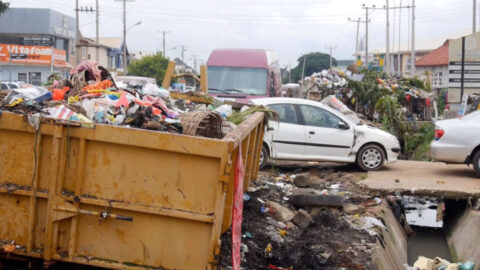
Environmental Decay and Public Health Risks
The strike has triggered a visible collapse of municipal services, leaving Abuja’s once-pristine streets buried under mountains of municipal solid waste. In high-density districts and satellite communities like Kurudu and Orozo, decomposing refuse has spilled onto major roadways, obstructing traffic and emitting a foul stench that residents describe as a “nightmare”.
Public health experts have warned of an imminent disease outbreak, as waste collection by the 54 newly contracted firms has completely ceased. Many of these contractors were already threatening to strike prior to this week due to nine months of unpaid wages, and the current administrative vacuum has rendered the Abuja Environmental Protection Board (AEPB) powerless to intervene.
Infrastructure Projects in Limbo
Simultaneously, the territory’s flagship road construction projects have suffered a severe setback. Major sites, including the expansion of the Outer Northern Expressway and various inter-district bridges, have seen a total cessation of activity. Sources within the FCTA Engineering Services confirm that the halt is twofold: a lack of administrative supervision caused by the strike and the government’s continued failure to process milestone payments for local contractors, many of whom have already withdrawn their equipment from project sites.
As of Tuesday morning, all FCTA secretariats and area council offices remain barricaded. While the National Industrial Court had previously issued an interlocutory injunction to halt the strike following an application by FCT Minister Nyesom Wike, the unions have remained defiant, vowing to maintain the blockade until their 11-point welfare demand list is conclusively addressed