

By Elder Abraham Amah
There are moments in a nation’s political life when symbolism is deployed not to inspire, but to conceal; not to heal, but to distract. One such moment is the recent frantic effort by the Taminu Turaki, SAN–led faction within the Peoples Democratic Party to parade a visit to former President Olusegun Obasanjo as a form of moral deodorant—an attempted cleansing ritual against the stench of disobedience to subsisting court orders and the lingering illegitimacy of the ill-fated Ibadan national convention. It is a maneuver as old as politics itself: when legality fails, seek legitimacy by proxy; when conscience is bruised, borrow the aura of history.
But politics, like philosophy, has a memory. And institutions, like courts, have a voice. One cannot drown out the solemn authority of the judiciary with photographs, handshakes, or carefully curated press releases. The law does not blink because a former president smiles. The Constitution does not pause because a statesman receives visitors. What we are witnessing is not reconciliation; it is image laundering—an anxious attempt to mask an unresolved moral and legal deficit with borrowed prestige.
The Ibadan convention did not become controversial because of factional bitterness or sour losers. It became controversial because it stood on a foundation openly hostile to the rule of law. Before delegates gathered, before banners were raised, before speeches were rehearsed, there were clear, subsisting orders of courts of competent jurisdiction restraining the conduct, recognition, or continuation of that convention. These orders were not advisory notes. They were not suggestions. They were commands issued in the name of the Federal Republic of Nigeria. To proceed in defiance of them was not courage; it was contempt. Not strategy; but recklessness.
In any serious democracy, contempt of court is not a technical error to be managed by public relations. It is a moral rupture. It signals the collapse of the internal discipline that binds political actors to constitutional order. When a political faction decides that the courts can be ignored if inconvenient, it is not merely asserting control over a party; it is announcing a philosophy of power that places will above law. That is the real wound inflicted by Ibadan—and it is a wound no visit to Abeokuta can heal.
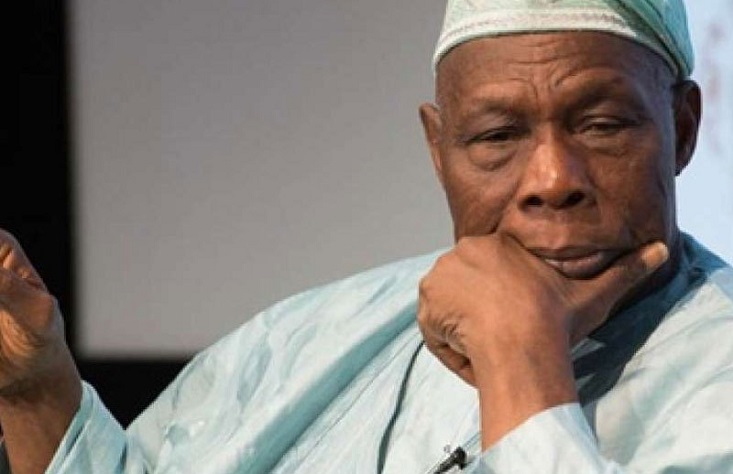
It is therefore philosophically troubling to watch the face of Chief Olusegun Obasanjo—one of the most consequential figures in Nigeria’s modern political history—being deployed, subtly or otherwise, as a shield against accountability. Obasanjo is many things: a former Head of State, a former President, a political colossus, a relentless critic of governance failure. But he is not, and should not be turned into, a moral insurance policy for lawlessness. To imply that proximity to him confers retroactive legitimacy on acts that violated court orders is to misunderstand both law and history.
History is not a charm one waves to erase present wrongdoing. It is a mirror, often unforgiving, that reflects continuity between past and present. Obasanjo himself is a product of moments when Nigeria paid dearly for the subordination of law to expediency. To conscript his image into a project that normalizes contempt for judicial authority is not only ironic; it is tragic.
Politics, at its deepest level, is a contest of ideas about order. Who decides? By what rules? And under what restraints? The judiciary exists precisely to answer these questions when political actors disagree. When a faction chooses to sidestep that arbiter and then seeks absolution through symbolism, it is not practicing politics; it is performing theatre. And theatre, however dramatic, does not bind institutions.
The attempt by the Turaki-led faction to reframe the narrative through a high-profile visit reveals an underlying anxiety. Confident actors do not rush to launder their image. Those secure in legality allow time, process, and reason to speak for them. The desperation to manufacture moral cover suggests an awareness—perhaps unspoken, but unmistakable—that the Ibadan exercise remains burdened by unresolved legitimacy questions. One does not seek borrowed robes unless one’s own garment is torn.
There is also a deeper, almost metaphysical dimension to this episode. In political philosophy, legitimacy flows from process, not outcome. Even the most popular decision, if reached through unlawful means, corrodes the system that sustains it. The Turaki faction may control party machinery today, but control achieved through defiance of court orders carries within it the seed of future instability. What is obtained by ignoring the law can only be sustained by continuing to ignore it. That is not governance; it is drift.
The judiciary, in this context, is not an obstacle to party cohesion; it is its guardian. Courts intervene in party affairs only when internal mechanisms fail and rights are threatened. To portray judicial orders as inconveniences to be brushed aside is to invite a future where no internal dissent can find lawful expression. Such a party may appear united, but it will be hollow—bound together by fear or force, not by consent.
It is therefore intellectually dishonest to suggest, even implicitly, that a visit to a former president can sanitize an act that remains sub judice or morally tainted. Courts do not take instructions from political elders. Judges do not read photographs as legal briefs. The law proceeds on evidence, argument, and principle—not on symbolism. To conflate political influence with legal resolution is to confuse power with authority.
There is also a moral question that cannot be evaded. What message does this send to younger politicians, to party faithful, to citizens watching from the sidelines? That court orders are optional? That legality can be negotiated after the fact? That if one gathers enough eminent faces, disobedience becomes strategy? These are not harmless signals. They erode civic culture. They teach cynicism. They tell Nigerians, once again, that rules are for the weak and connections for the strong.
Yet politics does not exist in a vacuum. Every act reverberates beyond its immediate objective. The PDP, already struggling with internal fractures and external skepticism, cannot afford to be seen as a party that treats the judiciary with disdain. A party that seeks national power must first demonstrate respect for national institutions. You cannot promise constitutional governance tomorrow while violating constitutional order today.
The tragedy of this episode is that it was avoidable. Courts could have been obeyed. Dialogue could have been pursued within the bounds of law. Even after missteps, humility and restraint could have prevailed. Instead, we are offered spectacle: a hurried pilgrimage to history, as though the presence of a former president can transmute defiance into destiny.
But history is not so easily manipulated. It records not only who visited whom, but why they did so. It remembers not only faces in photographs, but the principles abandoned behind the camera. When future scholars examine this moment, they will not ask who smiled for the press. They will ask who obeyed the law.
In the end, no amount of image laundering can cleanse contempt for court. No borrowed prestige can substitute for legitimacy earned through due process. And no political faction, however powerful, can permanently outrun the moral consequences of placing expediency above principle.
If the PDP is to recover its soul, it must confront Ibadan honestly—not with symbolism, but with accountability; not with borrowed faces, but with respect for institutions. Anything less is merely postponement. And postponed reckoning, in politics as in life, only grows more severe with time.
The law has spoken. History is watching. And neither can be fooled by choreography.
Elder Amah, a philosopher and public affairs analyst, contributed this piece from Abuja.






